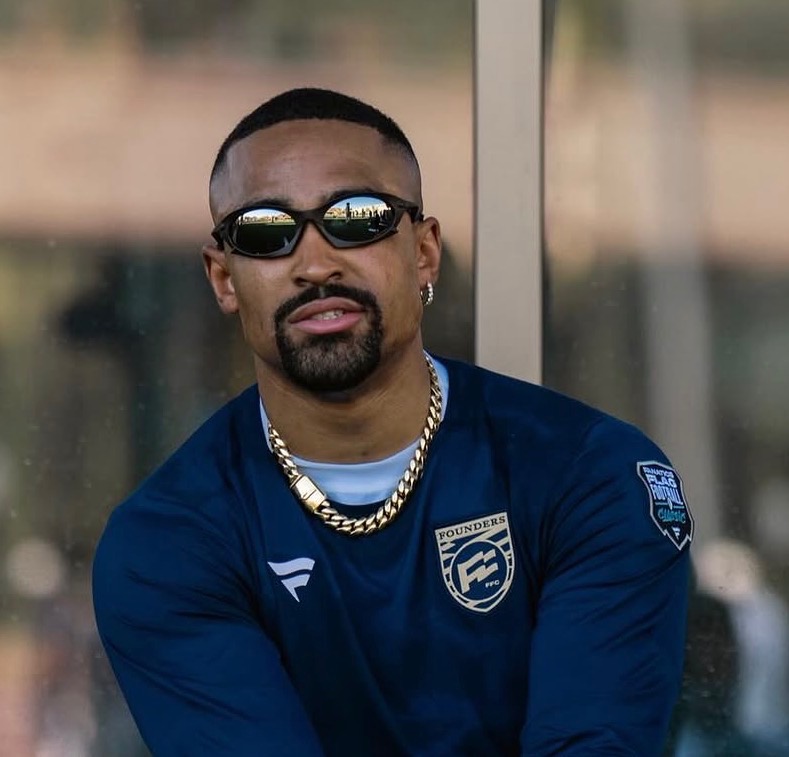
Philadelphia knows Jalen Hurts as the man who keeps his composure. The quarterback who takes the questions, carries the expectations and returns to work. Now, with Hurts expected to miss the remainder of the 2026 season after doctors discovered blood clots in both lungs, the familiar conversation about what he owes his team has given way to a more urgent one: how well was he protected?
On October 19, the Eagles and Hurts’ agent, Nicole Lynn, announced that further testing had revealed deep vein thrombosis and bilateral pulmonary emboli. Their statement described him as clinically stable, with no significant functional limitations, and offered an encouraging prognosis. Treatment includes blood thinners, which will keep him from contact activities, including football, while he takes them.
For Philadelphia, the announcement carries the consequences of losing a franchise quarterback. For Hurts and the people who love him, it concerns a life that continues long after the stadium empties.
The questions begin in London. Before the Eagles faced the Jacksonville Jaguars on October 11, specialists identified a superficial blood clot in Hurts’ left calf. Following medical evaluation, he was cleared to compete. He played in Philadelphia’s 19-17 loss. Subsequent testing revealed the more serious condition that has since removed him from the field.
The distinction between those diagnoses matters. The initial finding and the later discovery cannot responsibly be treated as though they were identical, or as though everyone involved possessed the same information throughout. A worsening medical picture does not automatically prove that an earlier decision was negligent. It does, however, make a careful examination of that decision necessary.
What information supported his clearance? What risks were discussed with him? What changed during the evaluations that followed? These are reasonable questions when an athlete plays after one clot is identified and is later diagnosed with clots in his lungs.
An alarming account of the hours before the London game drew further attention. Early reporting claimed Hurts had been advised against sleeping and had remained awake for 36 hours before taking the field. Subsequent reporting challenged that account, indicating that he had slept. The discrepancy deserves acknowledgment, especially when the original version has helped shape public outrage. Hurts’ health is serious enough to warrant exact reporting. Concern for him should make accuracy more essential.
By October 20, the NFL had publicly defended the Eagles’ handling of the situation. A league spokesperson told Reuters that the matter had been handled appropriately, citing communication with the team and medical personnel. The NFL Players Association called for a full investigation.
That leaves the league’s assurance alongside the union’s demand for a closer look. An investigation offers an opportunity to establish a clearer account of the medical decisions, the information available at each stage and the safeguards surrounding a player’s return to competition.
There is a broader discomfort here, too, for anyone who watches football. We have become fluent in the language of playing through pain. A player returns from the medical tent, and the stadium rises. A quarterback absorbs a punishing hit, gets to his feet and finishes the series, and we admire his resolve. The broadcast moves on. So do we.
Often, we know very little about what that return costs.
Hurts has built a public reputation around discipline and endurance. Those qualities help explain why fans trust him with the game in his hands. They should never become reasons to expect him to endure every risk attached to it. His ability to remain composed tells the audience little about the seriousness of a medical condition. His willingness to compete cannot replace the judgment of those responsible for deciding whether he safely can.
The encouraging news is that the Eagles expect him to recover fully. That expectation belongs at the center of this story, alongside a clear understanding that recovery will proceed on a medical timetable. There is no need to turn his treatment into another test of toughness or begin counting the days until he can prove himself again.
For now, Philadelphia will make its adjustments. Someone else will take the snaps. Coaches will revise their plans, and the season will continue with all its usual noise.
Hurts deserves the chance to recover without carrying that noise into every appointment. He has already given Philadelphia a championship. He should be able to take the time his health requires without anyone asking what else he can give.




Leave a Reply