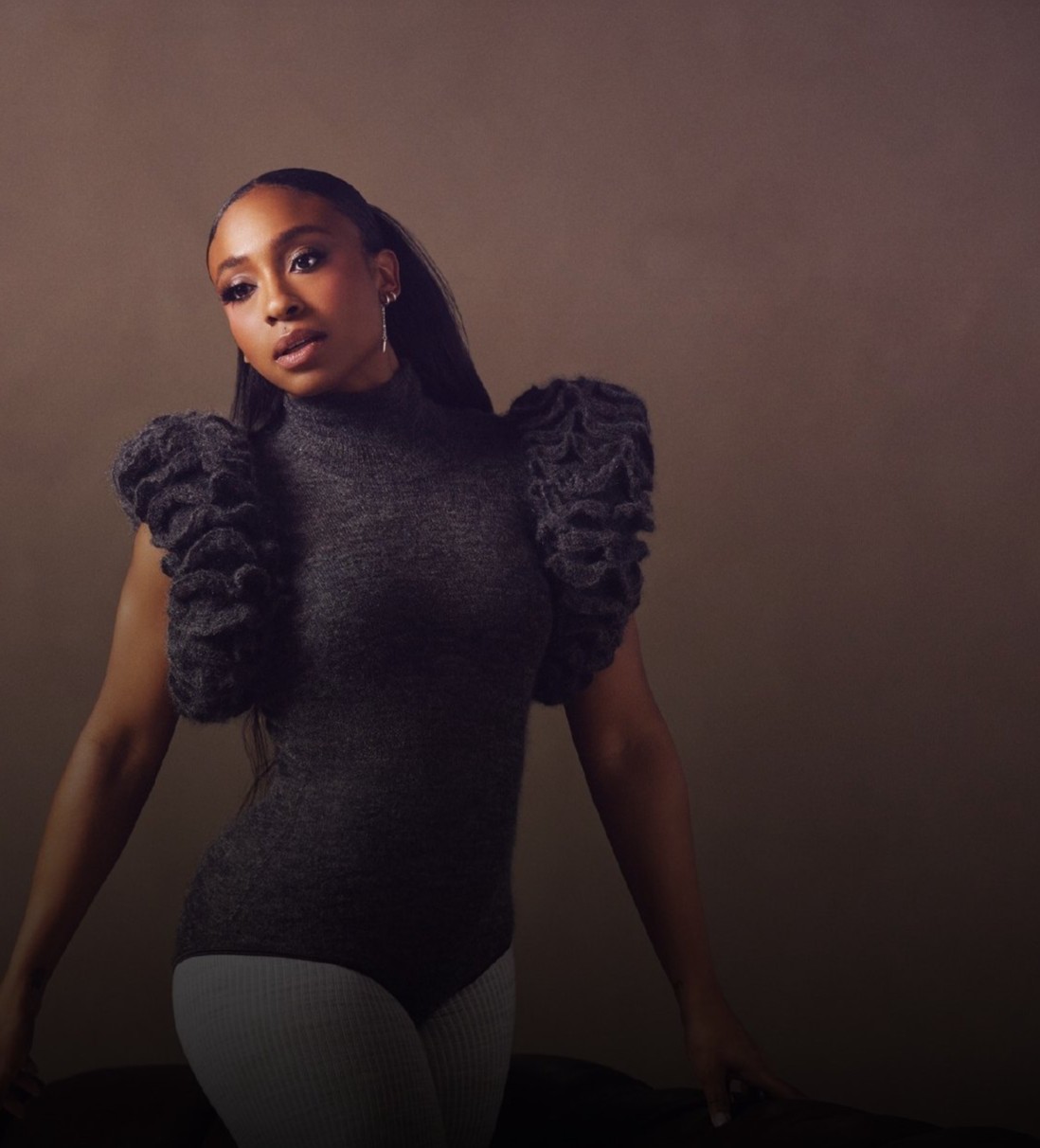
This interview first appeared in Caramel Magazine, Volume One (November 2026). Flip through the full issue on our homepage.
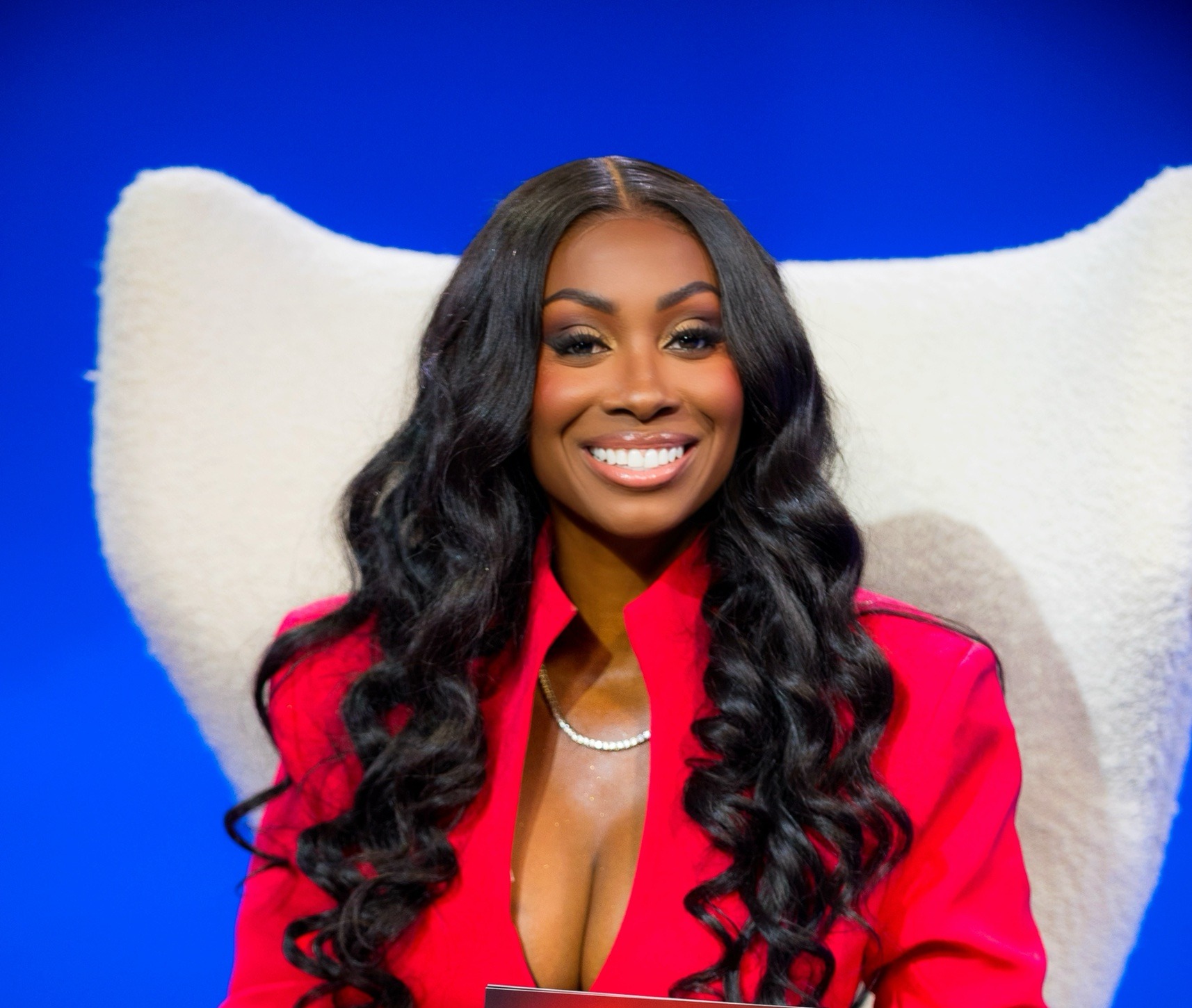
As Taylor Polidore Williams continues to captivate audiences and expand her influence beyond entertainment, Caramel Magazine had the opportunity to speak with the actress about her evolving career, the experiences that have shaped her, and the woman she is becoming. In an industry that rarely slows down, we wanted to look beyond the characters, the cameras, and the accolades to discover what matters most to the woman at the center of it all.
You’ve always been an entertainer. Take me back to Houston. Were you the one performing at every family gathering?
Definitely. Both sides of my family are from Houston, with roots in Texas and Louisiana. I come from a big Creole family, and we’re very close, so I grew up at my grandmothers’ houses, always with my cousins. I was a church girl, too. Church and community theater are really where I got my start: the choir, the dance team, the church plays. From there I went to the Ensemble Theatre. Houston has a beautiful arts scene, and my family is very active in it, so my artistry began there.
That makes sense. Growing up in church gives you a whole different kind of talent.
It really does. The confidence! One year my mom directed the Christmas play. I auditioned and got the lead, and she demoted me.
No!
Yes. I wasn’t learning my lines, and she told me, “You’re not ready.”
Your mama was not playing with you. But you’re ready now.
Always.
We share something special. We’re both HBCU women. I’m a Rocky Mount, North Carolina girl who graduated from North Carolina Central, and you’re a Clark Atlanta alumna.
What year were you at Central? My cousin went there.
I graduated in 2015.
He was there before you. Drew Church.
I know Mr. Church! I had no idea he was your cousin. Small world.
By marriage, but yes. He’s hilarious.
How did your HBCU experience shape the woman and the artist you are today?
Completely. My imagination, my dreams, my professionalism, the foundation of who I am as an artist, all of that came from Texas, my family and the arts community in Houston. But Clark Atlanta refined the kind of artist I wanted to be and how I wanted to move through this industry. The tenacity, the perseverance, the consistency, not being afraid to ask for what I want. Taking up space. The boldness came from CAU.
It’s a special experience to be at an HBCU, where we’re all on the same playing field. Race as a barrier is out the window, which is so rare for young Black people. At CAU, I felt there was no limit on me, and that confidence carries you into the world. Even when I face barriers, I believe I can overcome them. Our motto is “Find a way or make one.” If I know I want something, I can work for it. I’ll figure it out, or I’ll be led to what I’m supposed to do.
Our motto is “Find a way or make one.”
“Find a way or make one.” I needed that, because that same spirit carried me through Central and through everything I’ve had to build since. Now, Beauty in Black is my favorite show, and from the start I knew you were about to blow up. Leading a series of this magnitude has introduced your work to an even wider audience. What has it revealed to you about yourself as an actress?
It’s been very affirming. You can believe for so long that you can lead a show, that you can be the star of a Netflix series, whatever the dream may be, and that still takes faith. But when it actually happens, it tells you your dreams can come true. And because it happened, it makes me want to dream even bigger.
What do you understand about Kimmie now that you didn’t when you first stepped into the role?
Her unwillingness to trust, especially when it came to Horace. She was so hardened. At the time, I didn’t relate to that. If somebody offered me $10,000, I’d say, “Thank you!” Kimmie wasn’t like that, and I wondered why. As I learned more about her circumstances, I understood.
As I’ve grown, it’s not that I’m unwilling to trust, but I do ask, “What’s the motive? What do I have to do for you to do this for me?” I question things more. When things have always come at a price, you want the full picture before you jump in.
That’s growth, and it sounds like you earned it. Now you’re stepping into Reasonable Doubt as Brooke Cropper. Between Brooke and Kimmie, who is the more dangerous woman?
Brooke, one hundred percent.
Ooh. So Kimmie was just the warm-up?
She’s more calculated. She’s vindictive, and she’s extremely intelligent. Kimmie is stepping into power and learning how to use it. Brooke understands power, knows power, wants power and does not shy away from it. They’re two very different women.

You’ve worked across Snowfall, All American: Homecoming and Divorce in the Black, and now these two series. Which role changed how you see yourself as an artist?
That’s hard, because I learned something different from each one. But I’d say Beauty in Black, because of the sheer volume. It’s the first time I’ve been number one on a call sheet, and it’s such a popular show globally. For the first time, I had the material day in and day out and could really live with a character.
Then there was the reception. For the first time, I was aware of people around the world knowing who I am. It made me ask what it means to be an artist at this point. So much of my career had been, “I go from one job to the next. I just want to work.” Now I can be more specific and intentional because people are watching. That role has changed me the most.
And Reasonable Doubt is going to bring even more eyes. Everybody is talking about its return.
I hope so.
For all the power these women chase on screen, your real-life work is about giving back. Your grandmother fostered children, and now you’re continuing that work through The Shelter Rock Foundation. What did you witness as a little girl that stayed with you?
My grandmother became a foster parent when I was eight. She was also a child advocate, so for most of my childhood she was fostering. She was very open with me about the young people’s circumstances. I grew up with both of my parents in a loving home, so hearing that someone couldn’t be at home with their mom and dad, I thought, that’s horrible.
My instinct was, “Well, they can play with me.” And my mom would say, “We’re getting Christmas gifts for everybody.” Any child in my grandmother’s home was treated like family. They were at every cookout. They got birthday presents. My grandmother just loved children, and I have that same heart, particularly for those in vulnerable situations.
She sounds like the kind of woman every family needs. What did it mean to you to return to Clark Atlanta and help students with housing and mentorship?
It meant everything. I was a court-appointed special advocate for youth in foster care for years, and that work was very fulfilling. After Beauty in Black, with so many people supporting my work, I wanted to use my platform in a bigger way. That’s where The Shelter Rock Foundation came from. Our mission is to help young people, especially youth in foster care and vulnerable communities, and support their access to the arts.
Then I learned CAU was facing a housing shortage. It comes from strong enrollment, which is wonderful, but there aren’t enough places for students to live. So we launched The Shelter Rock Housing Scholarship, providing fully paid housing for three upperclassmen who are mass media arts majors and highly career-driven. That’s the type of student I was. I knew I wanted to act and make films and shows, and I started doing that in college.
I had the space to explore my creativity because I was on a full-ride academic scholarship. I worked to supplement my income, but my focus was my career. That was a privilege because I wasn’t just trying to survive. With the cost of living today, I don’t know how I would have done it if I hadn’t known how I was going to pay my rent.
Along with housing, our scholars receive mentorship on a capstone project they present to a panel of industry professionals. Our aim is for them to graduate with a portfolio, something tangible they’ve created, and hopefully work waiting for them. I hope we can help even more students in bigger ways, but this is how we begin.
The boldness came from CAU.
That’s powerful. When I was finishing up in mass communications, I was trying to keep a roof over my head while I graduated and built a career. Helping students focus on their dreams instead of their rent means a lot.
Thank you. Everything I do is rooted in purpose. I don’t do many things I’m not passionate about, and this is something I feel very passionate about. Clark Atlanta was so integral to my life that whatever the university needs, I’ll try to be there.
I want to talk about something that hits close to home for a lot of women reading this. You starred in H.P.V. (Her Pretty Vagina), a short film addressing endometriosis, HPV and the disparities Black women face in healthcare. What conversation did you hope it would start?
Any conversation. A lot of people don’t know what endometriosis is or what HPV is, even though most people will have it at some point. It can stay completely silent until it shows up, and it can lead to cervical cancer.
My hope was to begin the conversation so people could understand the pain women with endometriosis live with and ask about HPV and how to protect themselves. We wanted women who’ve had difficult experiences in a doctor’s office to feel seen, not alone or ashamed. Community comes from communication. People can find community, and all the good that comes with it, simply by having a conversation.
Last question, and then I’ll let you get back to this Atlanta traffic. What advice do you have for aspiring actors who want to break into the industry?
Stay in training, whatever that looks like for you. Keep your craft sharp. But also spend time getting to know yourself and the kind of artist you want to be. Be a student of the industry, of acting, of film. Develop your taste. Whose work do you like? What parts of other people’s careers do you admire? Learn about their difficulties. Read biographies, watch interviews. Immerse yourself so you have a perspective on where you want to go and know the shoulders you stand on, particularly as a young Black artist.
I had lunch with Meagan Good a few weeks ago, and she told me it isn’t about the destination. It’s about the journey and the process it takes to become who you are, because the difficulties you go through are hopefully making it better for whoever comes behind you.
That really resonated with me. Sometimes you think, “Why is this taking so long?” But you have to go through it. Study what you’re trying to become. Be a student, always. And be a student of life, because that’s the best teacher for an actor. Real people. Live your life.
Be a student, always. And be a student of life, because that’s the best teacher for an actor.
That’s advice I needed for myself. As a mom building a business I want to leave to my kids as a legacy, I’m still in the middle of that journey, too. I love that I got to meet the real Taylor, because I’m always watching Kimmie. You could be our next Halle Berry, and in this generation, you may surpass her. We’ll be celebrating you all November on Caramel Magazine.
Oh, my goodness. I receive that. I’m just trying to be me. It was a pleasure speaking with you, and I’m so excited for the article and the cover.
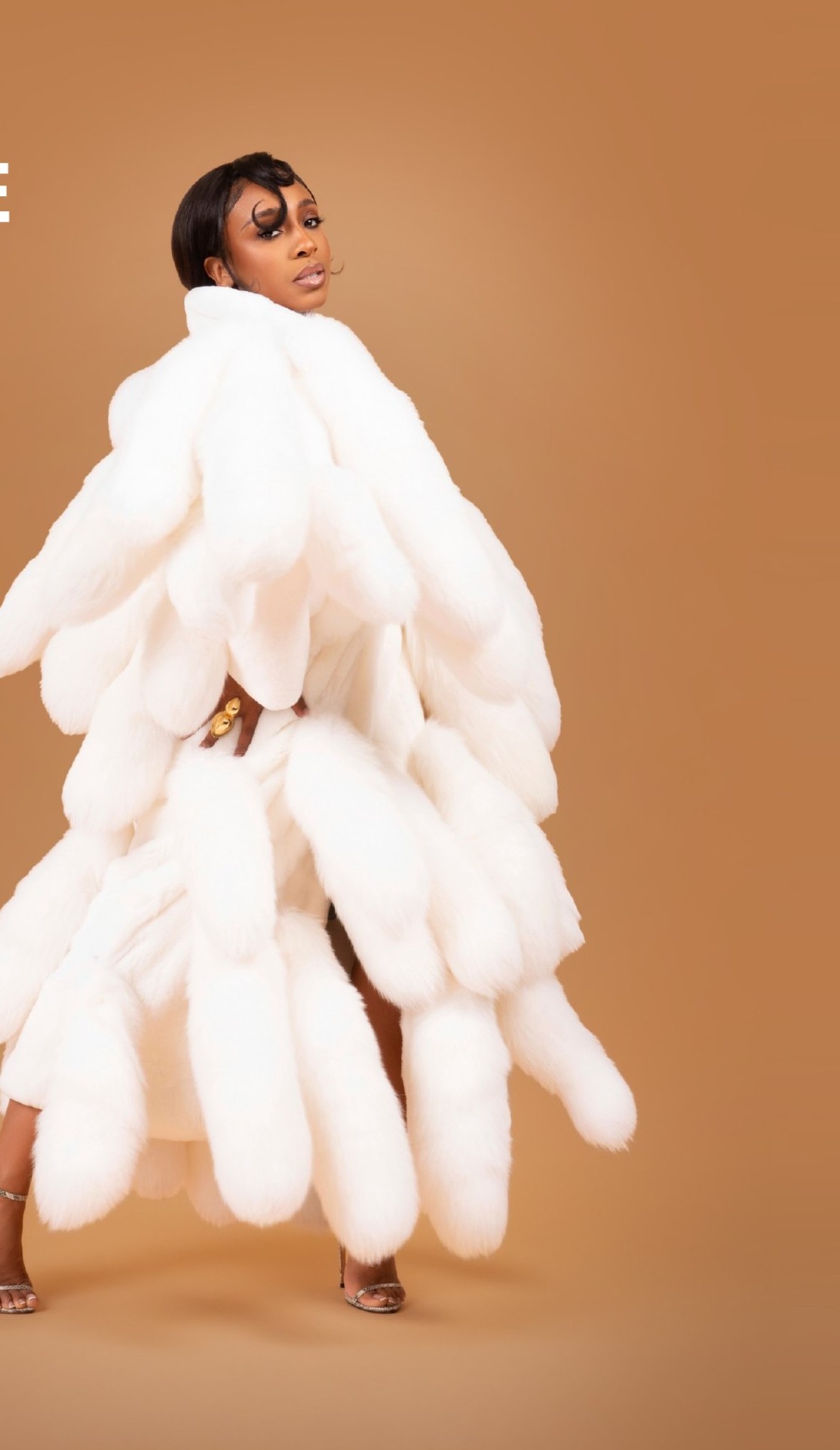
Photography by Alex D Rogers (@alexdrogersstudio). Read the cover story, The Beauty of Her Story.
Lead image: photo by Alex D Rogers (@alexdrogersstudio)

Leave a Reply